Inside Taipei's Club Circuit: The Acoustic Secret That's Making American Concert-Goers Book One-Way Tickets
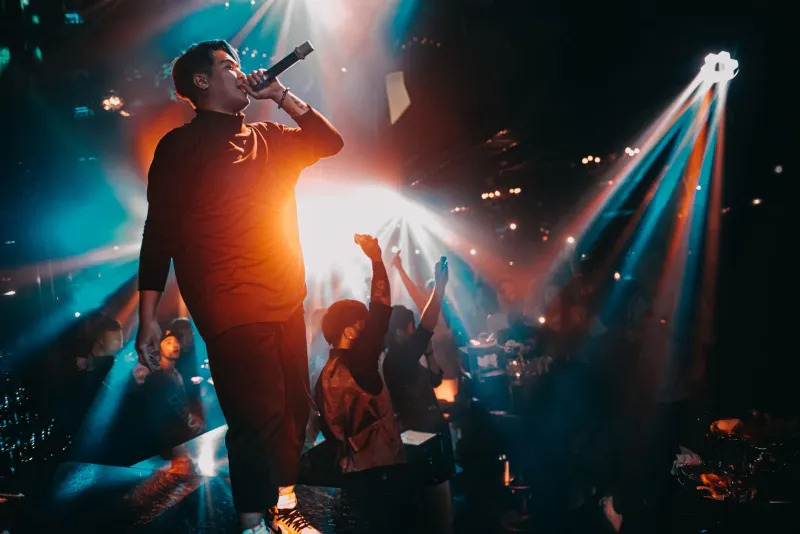
There's a running joke among musicians who've played both sides of the Pacific: "America gives you the crowd, Taiwan gives you the sound." It sounds like a throwaway line, but spend a few nights inside Taipei's best small venues and you'll stop laughing — because they're absolutely right.
American concert culture has long been obsessed with scale. Bigger stage, bigger screen, bigger production budget. And there's nothing wrong with that. But somewhere along the way, the actual listening experience got left behind. Ticket prices climbed, sound systems got optimized for the back of a 20,000-seat arena, and the connection between artist and audience stretched so thin it practically disappeared.
Taiwan went a different direction.
Architecture That Works With the Music, Not Against It
Walk into a mid-size Taipei venue — somewhere in the 300 to 800 capacity range — and the first thing you'll notice is how deliberate everything feels. Low ceilings with strategic diffusion panels. Stage positioning that puts performers almost uncomfortably close to the crowd. Booth placements that let sound engineers work with the room's natural resonance rather than fighting it.
This isn't accidental. Taiwan's venue operators, many of whom came up through the local indie and jazz scenes, have spent decades obsessing over room acoustics in a way that their American counterparts often don't. Real estate constraints in Taipei — a dense, expensive city — actually forced a design philosophy built around efficiency and intimacy rather than raw capacity.
"When you can't build out, you have to build smart," explains one longtime Taipei venue manager who's worked with international touring acts for over fifteen years. "Every square meter has to earn its place acoustically. You can't hide bad sound design behind a massive PA system."
The result? Rooms where you can hear the texture of a guitar string, the breath between vocal phrases, the actual dynamic range an artist intended when they recorded the album you love.
The Engineer Factor
Talk to any touring sound engineer who's worked in both markets and you'll hear a consistent theme: Taipei's in-house audio teams are unusually collaborative.
In large US venues, touring engineers often describe a combative dynamic — house staff protective of their systems, limited time for soundcheck, institutional inertia that prioritizes speed over quality. Taiwan's smaller clubs flip that script. House engineers at many Taipei venues have built reputations specifically around their ability to adapt quickly to a touring act's technical rider, sometimes making real-time adjustments mid-set that would be logistically impossible in a larger American room.
One American indie rock musician who toured East Asia last year put it bluntly: "In the States, soundcheck is a negotiation. In Taipei, it felt like a collaboration. The house engineer actually listened to the album before we arrived. Nobody does that."
This culture of preparation extends to the gear itself. Many of Taipei's top clubs have invested in high-end analog and hybrid systems that prioritize warmth and clarity over sheer volume — a choice that pays dividends for genres like jazz, acoustic folk, ambient electronic, and vocal-forward pop that often get flattened in arena environments.
Artist Access: The Part Nobody Talks About Enough
Beyond sound quality, there's another dimension to the Taiwan club experience that American fans consistently describe as transformative: the artist is actually there.
This isn't just about meet-and-greets (though those exist). It's about the physical layout of smaller venues creating unavoidable proximity. You're sharing the same bar. The same outdoor smoking area. The same narrow hallway to the restrooms. In a 500-person club, the barrier between performer and audience isn't a velvet rope — it's basically nothing.
For American fans accustomed to watching their favorite artists through binoculars or a phone screen, this kind of access feels almost surreal. Artists who would be completely unreachable at a US amphitheater show are suddenly three feet away, talking about the set list, signing merch, asking where you flew in from.
"I went to a show in Ximending and ended up having a twenty-minute conversation with the opening act," recalls one American expat who's been attending Taipei shows regularly for two years. "That person has since signed to a major label. I have their personal contact. That doesn't happen at a show in LA."
How to Plan Your Taipei Club Crawl
If this is making you want to book flights, here's how to approach a Taipei venue trip strategically:
Timing matters. Taipei's live music calendar is densest from September through April, when the weather cooperates and international touring acts tend to route through Asia. Summer months are hot and humid, but the local scene stays active year-round.
Know your neighborhoods. Da'an District and Zhongzheng are traditional live music hubs, but Zhongshan and Xinyi have seen significant venue growth in recent years. Each area has a slightly different vibe — Da'an leans indie and experimental, Xinyi pulls more pop and electronic acts.
Buy tickets early. Taipei's best small venues sell out faster than you'd expect, especially for international acts. LGEvent TW tracks upcoming shows with ticketing links, so check the listings before you land.
Show up for soundcheck. Many Taipei venues allow early entry during soundcheck for a small additional fee or simply because the staff is relaxed about it. This is worth doing. You'll hear the room at its most transparent, and you might get a few words with the artist before the crowd arrives.
The Bottom Line
America does spectacle better than almost anyone. But spectacle and experience aren't the same thing. Taiwan's club circuit has figured out something that the US concert industry, with all its resources and scale, keeps missing: the best shows happen when the room is small enough to feel the music move through the air.
For American fans who've started to feel like large venues are selling them an illusion of connection rather than the real thing, Taipei's clubs aren't just a travel curiosity — they're a genuine upgrade. And once you've heard your favorite genre in a room that was actually built to hold it, going back to the nosebleeds starts to feel like a step backward.
Check the LGEvent TW listings and start planning. Your ears will thank you.