Taiwan Is Your Cheat Code for Discovering the Next Big Asian Music Stars Before Anyone Else Does
Remember when you heard about BTS six months before your coworkers? Or when you were streaming YOASOBI before any English-language publication had covered them? That feeling — being genuinely ahead on something that later becomes massive — is increasingly hard to find. Algorithms surface the same content to everyone, and the gap between "underground" and "everywhere" has compressed to almost nothing.
Except in one place.
Taiwan has become the one market where the musical ecosystems of Greater China, Japan, and South Korea overlap organically, creating a discovery environment that's genuinely unlike anywhere else on the planet. If you're a US music fan who cares about staying ahead, Taiwan isn't just a travel destination — it's a strategic asset.
Why Taiwan? The Geography Argument
Let's start with the obvious: Taiwan's location is almost impossibly convenient for cross-regional music discovery. Sitting roughly equidistant between Tokyo, Seoul, and Hong Kong, the island functions as a natural crossroads for East Asian pop culture. Artists from all three scenes tour Taiwan regularly, often treating it as a testing ground for new material or a warm-up stop before larger regional runs.
But geography alone doesn't explain it. Plenty of cities are centrally located and don't develop this kind of cultural magnetism. What makes Taiwan different is the receptiveness of its local audience.
Taiwanese music fans have a long tradition of embracing artists from across the region without the nationalistic friction that can complicate cross-market reception elsewhere. A rising Chinese indie artist, a Japanese city-pop act, and a Korean experimental producer can all find genuine audiences in Taipei within the same weekend festival lineup. That kind of curatorial openness is rare, and it creates an event scene that functions almost like a live A&R operation.
The Festival Circuit as Discovery Engine
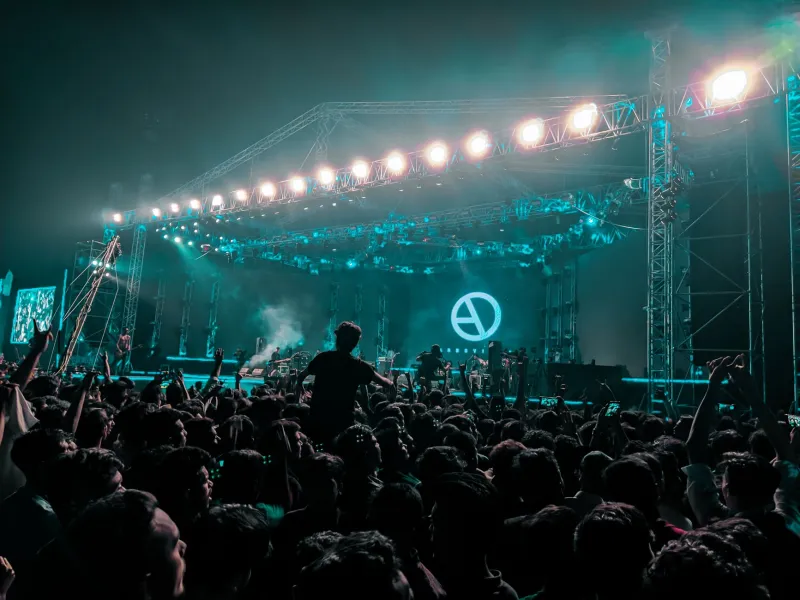
Taiwan's festival calendar has evolved significantly over the past decade. What was once a relatively modest local scene has grown into a sophisticated network of multi-genre events that actively program undiscovered regional talent alongside established names.
Festivals like Spring Scream, Formoz, and Wave Music Festival have built reputations for mixing known headliners with genuinely emerging acts from across East Asia. The logic is intentional: organizers understand that their audience is sophisticated enough to appreciate discovery, not just recognition.
For American attendees, this creates an experience that's genuinely different from US festival culture. At Coachella or Lollapalooza, the lineup is essentially a confirmation of what's already popular. Taiwan's top festivals function more like a preview — you're watching artists at the moment before the wave breaks.
"I saw three acts at a festival in Taipei two years ago that I'd never heard of," says one American music blogger who's attended Taiwanese events annually since 2019. "All three of them have since signed international deals or had songs go viral on TikTok. The festival was basically calling the shot eighteen months early."
The Mandopop-K-pop-J-pop Triangle
Each of the three major East Asian pop traditions has its own distinct relationship with Taiwan, and understanding that triangle helps explain why the island works so well as a discovery hub.
Mandopop has deep roots in Taiwan — the island was historically one of the genre's primary production centers, and that legacy means Taiwanese audiences have an unusually nuanced ear for Mandarin-language pop. Emerging artists from mainland China often test new sounds in Taiwan before committing to wider releases, knowing they'll get honest, sophisticated feedback from a crowd that takes the genre seriously.
K-pop has found Taiwan to be one of its most enthusiastic Southeast Asian markets, but the relationship has matured beyond simple fandom. Taiwanese promoters have become skilled at booking Korean acts at the precise moment of their breakout — not after they're already selling out arenas, but right as the momentum is building. For American fans, this means Taipei shows often represent the last opportunity to see a K-pop act in an intimate setting before the stadium era begins.
J-pop and J-indie flow into Taiwan through a combination of cultural affinity and active promotional relationships between Japanese labels and Taiwanese venues. Artists who are enormous in Japan but essentially unknown in the US frequently play Taipei club shows and mid-size festivals, giving American fans a window into a market they'd otherwise have no practical access to.
Artist Residency Programs: The Deeper Layer
Beyond the festival circuit, Taiwan has developed a network of artist residency and exchange programs that bring emerging regional musicians to the island for extended periods. These programs — some run by cultural institutions, others by independent labels and venue networks — create a pipeline of developing artists who build genuine creative relationships with the Taiwanese scene.
The downstream effect for international fans is significant: artists who've done residencies in Taiwan often develop a loyalty to the market that translates into more frequent touring, more accessible shows, and deeper engagement with local audiences. If you're following an artist who spent time developing their sound in Taipei, you're likely getting a more authentic version of that artist than markets they treat purely as commercial stops.
How to Actually Use Taiwan as a Discovery Hub
This is all well and good in theory, but how does an American music fan actually operationalize it? A few practical approaches:
Follow the local tastemakers. Taiwanese music media — blogs, YouTube channels, streaming playlist curators — are operating with information and access that Western sources simply don't have. Finding two or three reliable Taiwanese music accounts to follow will consistently surface artists months before they appear in English-language coverage.
Prioritize multi-day festival passes. Single-night shows are great for artists you already know. Festivals are where discovery happens. Buy the full pass, resist the urge to only watch headliners, and spend time on secondary stages. That's where the next wave lives.
Use LGEvent TW's listings as a research tool. The event calendar here isn't just a ticketing resource — it's a map of what's happening across regional music scenes in real time. An unfamiliar name on a strong lineup is almost always worth investigating.
Talk to people at shows. This sounds obvious, but Taiwanese music fans are extraordinarily knowledgeable and genuinely enthusiastic about sharing recommendations. A conversation at a festival bar has launched more American fans down rabbit holes than any algorithm.
The Window Is Open — But It Won't Be Forever
The reason Taiwan works as a discovery hub is partly that it hasn't been fully discovered as a discovery hub by the mainstream American market. Once that changes — once US music media starts treating Taipei the way they treat London or Seoul as a barometer for what's coming — the advantage narrows.
Right now, though, the window is wide open. The artists playing Taiwan's festival stages and club circuits this year are the names you'll be explaining to your friends in 2026. Getting there first is still entirely possible.
You just have to actually go.