Why Taipei Gets the Show First: The Real Reason Asia's Biggest Tours Start in Taiwan
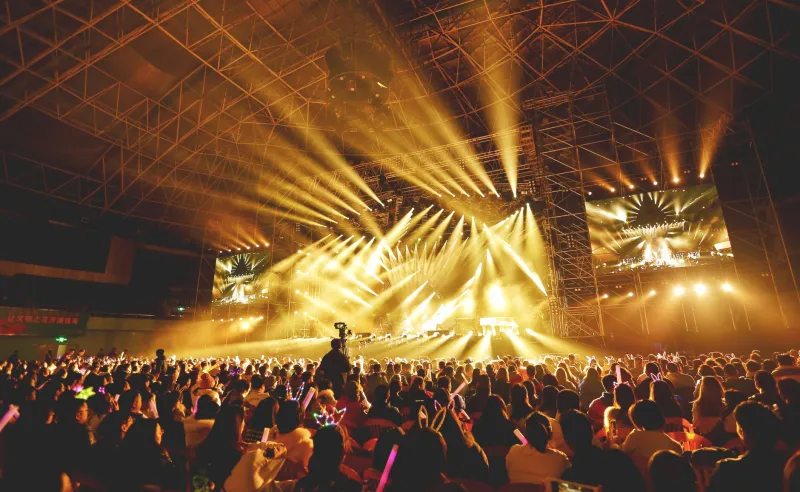
If you've ever scrolled through a K-pop or J-pop fan forum and noticed that your favorite group played Taipei Arena six months before their US tour announcement even dropped, you're not imagining things. Taiwan keeps showing up early on the touring calendars of some of Asia's biggest acts—and it's not random luck or geographic convenience. There's a deliberate, fascinating logic behind it, and understanding it changes how you think about Taiwan as a music destination.
This isn't just about being first. It's about what "first" actually means in the touring world.
The Testing Ground Theory
Tour production is expensive. A stadium-level show for a major Asian act can run into the tens of millions of dollars once you factor in staging, lighting rigs, pyrotechnics, choreography crews, and the sheer logistics of moving an entire production across time zones. Before an act commits to a full global run—or before they scale up to larger venues in markets like the US or Japan—they need somewhere to stress-test the whole machine.
Taipei is almost perfectly suited for this role. The city has world-class venue infrastructure, a concert-going audience that is genuinely passionate and deeply knowledgeable, and a media ecosystem that generates immediate, credible buzz. A sold-out night at Taipei Arena sends a signal to international promoters that an act has real pulling power outside their home country. It's essentially a proof-of-concept performance that unlocks bigger deals downstream.
For American fans, this means that by the time an artist lands a US date, the show you're seeing has already been refined, tightened, and optimized—often on Taiwanese stages.
The Economics of Touring in a Compact Market
Here's something that doesn't get talked about enough: Taiwan's geography is a touring promoter's dream. The island is small enough that an act can realistically play Taipei, Taichung, and Kaohsiung within a single week without the kind of logistical nightmare that comes with, say, a North American run. You're not moving production equipment across three time zones or dealing with five different union contracts.
This compactness makes Taiwan an unusually efficient market. Artists can generate significant revenue and audience engagement with relatively contained operational overhead. For newer acts building their international profile, that efficiency is genuinely meaningful—it lets them dip a toe into international touring without betting the entire production budget on one market.
Meanwhile, ticket prices in Taiwan, while competitive, tend to be more accessible than US arena pricing. That accessibility drives higher sell-through rates, which in turn generates the kind of full-house photos and fan energy that fuel social media cycles globally. A packed Taipei Arena creates FOMO in Los Angeles and New York in a way that a half-empty venue in a secondary US city simply doesn't.
Taiwan's Audience Is a Superpower
This part is hard to quantify but impossible to ignore: Taiwanese concert audiences are extraordinary. The culture around live music here rewards preparation and presence in equal measure. Fans know the deep cuts. They bring the right light sticks in synchronized colors. They learn the fan chants phonetically even for songs in languages they don't speak natively. The energy in a Taiwanese concert hall on a big night is something that touring musicians and their teams consistently cite as a highlight of the entire run.
For an artist building international momentum, that reception matters enormously. Playing to an audience that is fully locked in—emotionally, energetically, culturally—generates a kind of performance footage and fan documentation that becomes promotional content in its own right. The fan videos from a Taipei show that go viral on TikTok are often the thing that convinces American audiences to start paying attention.
In other words, Taiwan's fans don't just attend concerts. They amplify them.
The Mandopop Factor and Regional Ripple Effects
Taiwan occupies a unique cultural position in the Chinese-speaking world. Taipei is, in many ways, the cultural capital of Mandopop—the Mandarin-language pop music genre that reaches audiences across Taiwan, mainland China, Hong Kong, Singapore, Malaysia, and the broader diaspora. For any act with ambitions in those markets, a strong Taiwan showing is a credibility stamp.
This dynamic works in both directions. International acts—K-pop groups, Japanese artists, even some Western acts with strong Asian followings—play Taiwan partly because it signals seriousness about the broader Chinese-speaking market. And homegrown Taiwanese artists who break through at home often use that momentum to launch into Southeast Asia and beyond.
For American fans who've been sleeping on this, the implication is significant: Taiwan isn't just a stop on an Asian tour. It's often the launch pad that determines whether a full global tour happens at all.
What This Means If You're a Serious Music Fan
The math here is pretty simple. If you want to see a major Asian act at their creative peak—before the setlist gets trimmed for mainstream Western audiences, before the production gets adapted for different venue configurations, before the ticket prices get marked up for US markets—Taiwan is where you want to be.
You're not just getting the show earlier. You're getting a different version of the show. Taipei dates often feature longer sets, more experimental song choices, and a level of fan-artist interaction that large US arena shows rarely replicate. Artists who know they're playing to a deeply invested audience tend to give more.
There's also the practical advantage of timing. US tour announcements for major Asian acts often come with a presale frenzy that crashes ticketing sites and sends prices into resale territory immediately. Taiwan shows, while competitive, tend to have a slightly longer window between announcement and sellout—especially if you're watching for them through a platform like LGEvent TW that tracks announcements as they drop.
The FOMO Is Real, But So Is the Opportunity
Here's the honest pitch: every cycle of major Asian touring that passes without a Taiwan trip is a missed window. The acts that are playing Taipei Arena this year are the ones filling US stadiums in two or three years—if they get there at all. Some of them never do US dates. Some of them do, but scale up to venues so large that the intimate, electric energy of the Taipei shows becomes something different entirely.
Taiwan's position as a first-stop touring market isn't a fluke or a trend. It's structural, and it's not going anywhere. The question is whether you're going to keep watching the highlights on social media or start showing up in person.
LGEvent TW tracks the full calendar of upcoming Taiwan shows, from arena announcements to club dates, so you're never the last to know when the next big act locks in a Taipei date. Check back often—the early birds here are flying to Taiwan.