Taipei's Recording Studios Are Hollywood's Quiet Secret — And the Word Is Getting Out
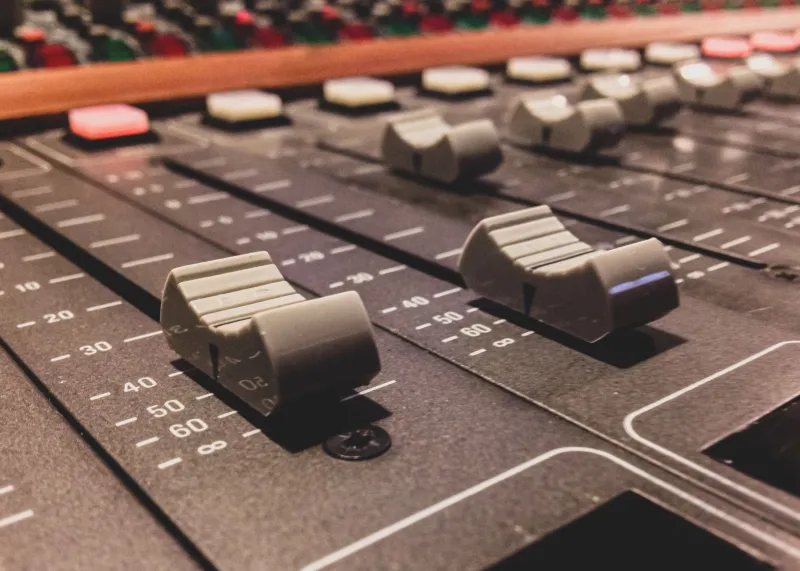
For decades, the default assumption in Western music production was simple: you record in Los Angeles, New York, London, or Nashville. Maybe Stockholm if you're chasing that Scandinavian pop sound. The idea that a producer would book a flight to Taipei to lay down tracks wasn't just unusual — it wasn't even a conversation anyone was having.
That's changing, and it's changing faster than most people in the industry want to publicly admit.
A quiet but accelerating movement of Western artists, producers, and audio engineers have been making their way to Taiwan's studios over the past several years, drawn by a combination of factors that, when stacked together, make a surprisingly compelling case. The economics are part of it. But the full story is more interesting than just cheaper studio rates.
The Cost Reality That No One Talks About Openly
Let's start with the number that gets people on the plane. A day of studio time at a high-tier facility in Los Angeles — think a room with a proper SSL console, isolation booths, a seasoned engineer, and all the outboard gear you'd expect — can run anywhere from $1,500 to $3,500 depending on the studio and the engineer's rate. A comparable session at one of Taipei's top-end facilities? You're looking at roughly one-third to one-half of that cost, sometimes less.
For independent artists and mid-tier producers working without major label budgets, that math is transformative. A project that would require three days of LA studio time can become a week of Taipei sessions for the same spend — and more time in the room almost always means a better record.
But the producers who've made the trip consistently say the same thing: they didn't go back just because it was cheaper. They went back because the work was good.
What Makes Taiwan's Studio Infrastructure Legit
Taiwan has been quietly building serious audio infrastructure for longer than most outsiders realize. The island's domestic pop industry — Mandopop, as it's known — has been one of Asia's most commercially dominant music markets since the 1980s. Artists like Teresa Teng, Jay Chou, and A-Mei didn't achieve regional dominance by recording in subpar rooms. Taiwan's studios evolved to serve a demanding, commercially sophisticated local industry, and that foundation matters.
Several Taipei facilities now house equipment that would be at home in any world-class recording environment: vintage Neve and API consoles, extensive collections of classic outboard gear, purpose-built live rooms with variable acoustics, and — increasingly — hybrid analog-digital setups that appeal to producers who work across both domains. The engineering talent pool has also matured significantly, with a generation of Taiwanese engineers who trained abroad (many in the US, UK, and Japan) before returning home.
What this creates is a studio culture that combines technical rigor with a working pace that many Western producers find genuinely refreshing. Sessions in Taipei tend to run focused and efficient — the "let's bill another hour while we figure out the vibe" dynamic that inflates LA studio budgets is notably less present.
The Sound Design Angle That's Drawing Electronic Producers
Beyond traditional recording, Taiwan has developed a niche that's attracting a specific type of Western producer: the electronic and hybrid sound design community. Several Taipei-based music tech companies have emerged as suppliers of sample packs, synthesis tools, and production software that draw on East Asian sonic textures — traditional instrumentation, tonal languages, regional rhythmic patterns — in ways that feel fresh rather than gimmicky.
For Western producers looking to add genuine textural depth to electronic productions without resorting to the same royalty-free Asia-inspired samples everyone else is using, collaborating directly with Taiwanese sound designers offers something meaningfully different. The results tend to sound like actual fusion rather than aesthetic appropriation, largely because the collaboration happens in the room rather than through a sample marketplace.
This has been particularly attractive to producers working in ambient, lo-fi, and experimental electronic genres — spaces where sonic distinctiveness is a primary value proposition. A track that sounds like nothing else is worth a lot, and Taipei's sound design community is increasingly well-positioned to help deliver that.
The Cultural Exchange That Happens When You're Actually There
There's a less quantifiable element to the Taiwan recording experience that keeps coming up in conversations with producers who've made the trip: the city itself feeds the work.
Taipei is a dense, walkable, stimulating urban environment with a food culture that borders on obsessive, a nightlife scene that runs genuinely late, and a creative community across music, visual art, and fashion that is both ambitious and surprisingly accessible to outsiders. Producers who come expecting a transactional studio experience frequently find themselves drawn into the city's creative ecosystem in ways they didn't anticipate.
The practical version of this is collaboration. Western producers working in Taipei studios have found themselves recording with local musicians, sampling street performers, attending underground club nights that expose them to sounds they wouldn't have encountered anywhere else, and building relationships with Taiwanese artists who bring genuinely different musical perspectives to the session. Several of these chance collaborations have ended up on commercially released records — sometimes credited, sometimes not, but always influential on the final product.
Why This Trend Is About to Get Louder
For now, Taiwan's recording scene benefits from a degree of obscurity that keeps the community tight and the rates reasonable. But several converging factors suggest the window on that obscurity is closing.
Taiwan's government has been actively investing in its creative industries through programs designed to position the island as a regional hub for music and entertainment. The infrastructure investment is real and ongoing. Meanwhile, word-of-mouth among Western producers — the kind that travels through private Discord servers and industry Slack channels rather than press releases — has been building steadily.
The streaming economy has also changed the calculus. When a record's commercial ceiling is partially determined by its ability to travel globally across playlists and algorithm-driven discovery, the idea of building sonic distinctiveness through genuine cross-cultural production makes more strategic sense than it did in the format-driven radio era. A record that sounds like it came from somewhere interesting has a structural advantage in an attention economy.
Taiwan is somewhere interesting. Its studios are good. Its engineers are skilled. Its city is alive in ways that feed creative work. And it's still, for now, a secret that the mainstream hasn't fully caught up to.
For producers and artists willing to do the research and make the trip, that's an opportunity that won't stay open forever. The smart money is already on the plane.