How Taipei's Live Music Scene Is Quietly Rewriting the Rulebook in LA, Nashville, and NYC
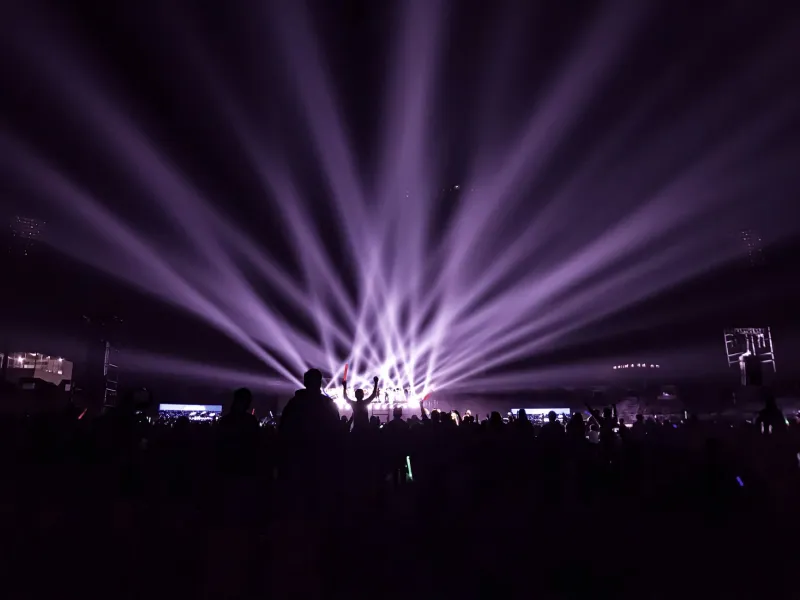
For decades, the story went one way: America made the music, and the rest of the world bought in. Artists from Los Angeles packed arenas in Seoul. Nashville's country sound found fans in Singapore. New York's hip-hop producers set trends that rippled across every continent. The cultural current ran westward, and everyone just kind of accepted that as fact.
Something shifted. Quietly, almost invisibly, music industry insiders from the US have started making very deliberate trips to Taiwan — and they're not coming to perform. They're coming to watch, listen, and take notes.
The Scouting Trip That Changed the Conversation
Talk to enough A&R reps or independent producers these days and a pattern starts to emerge. Taipei keeps coming up. Not as a market to crack or a tour stop to add — but as a source of inspiration, a place where something genuinely different is happening at the intersection of live performance, fan culture, and event production.
One Nashville-based songwriter who asked to stay anonymous described her first trip to a major Taipei music festival as "a complete reset." She'd gone expecting a polished but derivative version of what she already knew. What she found instead was a crowd that engaged with music on a granular level she hadn't experienced stateside — audiences who knew every production layer of a song, who reacted to sonic choices the way American sports fans react to a clutch play. "The energy wasn't louder," she said. "It was smarter."
That kind of observation is becoming increasingly common among the American creatives making the Taipei pilgrimage.
What Taiwan's Event Culture Actually Looks Like Up Close
To understand why US industry folks are paying attention, you have to understand what makes Taiwan's event scene distinct in the first place.
Taipei's live music ecosystem isn't just big — it's layered. You've got massive stadium productions that rival anything you'd see in Los Angeles, but you also have an extraordinarily active mid-tier scene: intimate festival stages, genre-specific showcases, and multi-day cultural events that blend music with visual art, food, and community ritual in ways that feel genuinely integrated rather than slapped together for Instagram.
The production values at even mid-sized Taipei events tend to be startlingly high. Sound engineering, stage design, and lighting are treated as artistic priorities rather than technical afterthoughts. And the talent pipeline feeding these events — from indie artists grinding through small Taipei venues to established Mandopop acts headlining 50,000-person shows — is deep, diverse, and moving fast.
For an LA producer used to seeing the same recycled sounds climb the charts, walking through a weekend at one of Taiwan's bigger festivals is like flipping to a channel you didn't know existed.
The Reverse Brain Drain Nobody's Officially Talking About
Here's the part that's genuinely new: it's not just individual creatives making personal discovery trips. Label representatives, publishing house scouts, and production company executives are now building formal research trips into their annual calendars. Taiwan is being treated, in some corners of the US industry, the way South Korea was treated a decade ago — except with less fanfare and arguably more nuance.
The influence is already showing up in American releases, even if it's not being credited openly. Production techniques popularized in Taiwanese live settings — specific approaches to layering vocals, the way certain electronic elements are mixed to translate across massive outdoor spaces, even structural choices in how songs build toward their emotional peak — are finding their way into studio sessions in Burbank and Brooklyn.
Songwriting camps, which have become a staple of how major US labels develop material, are increasingly incorporating writers and producers with direct ties to Taiwan's music ecosystem. The exchange isn't always loud or obvious. But it's real.
Why Taiwan, and Why Now?
Several factors converged to make this moment possible. The global streaming era flattened the old geographic hierarchies of music consumption, meaning Taiwanese artists and producers have been building international audiences without needing a US label cosign. That independent momentum created a scene that evolved on its own terms, developing aesthetics and techniques that weren't derived from American templates.
At the same time, Taiwan's event infrastructure — the venues, the festival organizations, the ticketing platforms — matured rapidly over the past decade. What was once a circuit that Western industry types might have dismissed as regional is now operating at a scale and sophistication that commands respect on a global level.
And frankly, American music has been in something of a creative holding pattern. When the formulas that drove streaming numbers start feeling stale even to the people writing them, smart creatives go looking for new inputs. Taiwan, it turns out, has a lot to offer.
What This Means for American Fans
If you've been following the LGEvent TW coverage of Taiwan's concert and festival circuit, none of this should be entirely surprising. We've been watching Taipei's event scene build toward this kind of influence for a while now.
For American fans, the practical takeaway is worth sitting with: the music you're going to be hearing on US radio and streaming platforms over the next few years is being quietly shaped by what's happening in Taipei right now. The festival headliners, the production choices, the sonic textures that feel fresh in 2025 and 2026 — some of that DNA is coming from Taiwan.
Which raises an obvious question: why wait to experience it secondhand?
The Case for Getting There Before the Credits Roll
There's something uniquely satisfying about experiencing a cultural moment at its source before it gets filtered, repackaged, and exported. American music fans had that opportunity with K-pop a decade ago, and most of them missed the early window. The ones who didn't — who were in Seoul for festivals before BTS was a household name in Ohio — have a relationship with that music that the late adopters simply can't replicate.
Taiwan is offering a similar window right now. The artists, the events, the production culture that American industry insiders are quietly flying across the Pacific to study — you can just go experience it directly. No industry badge required.
The creative current has shifted. America is importing ideas from Taipei, and the results are going to show up everywhere. Getting ahead of that curve is as simple as booking a flight and showing up to the right festival.
We can help with the rest.