Cheap Studios, Big Ideas: How Taipei Became a Secret Workshop for US Musicians
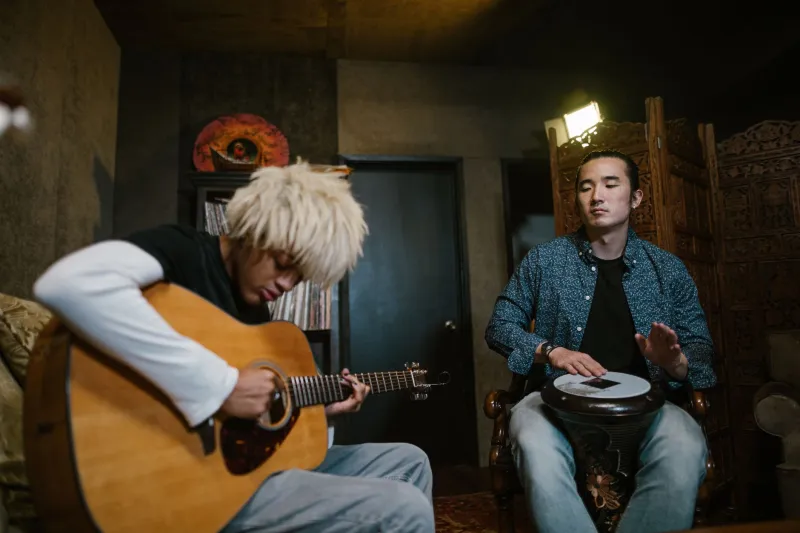
There's a recording studio in the Da'an district of Taipei that books out at roughly forty dollars an hour. It has a Neve console, a live room that seats a full band, and an engineer who has worked sessions with some of the most respected producers in Mandopop. For context, a comparable studio in Nashville runs closer to two hundred dollars an hour — and that's before you factor in engineer fees.
That math is not lost on American musicians. And increasingly, it's driving a quiet migration of US artists to Taiwan that has almost nothing to do with touring and everything to do with what happens when the pressure's off and the tape is rolling.
The Economics That Make It Possible
Taipei's recording infrastructure has been built up over decades to serve one of Asia's most productive music industries. Mandopop — the Mandarin-language pop genre that dominates charts across Taiwan, China, and the broader Chinese-speaking diaspora — generates enormous demand for studio time, session musicians, engineers, and producers. That demand has created a dense ecosystem of professional-grade facilities at prices that reflect local wage structures, not US market rates.
For American artists, particularly independent musicians and mid-tier acts who aren't traveling on major label budgets, this gap is transformative. A week of serious studio work in Taipei — including accommodation, food, and sessions — can cost less than two days in a comparable Los Angeles facility.
"I came for ten days and recorded more usable material than I had in the previous two years back home," says Jordan M., an indie-folk artist from Portland who has made three separate working trips to Taipei. "There's no clock anxiety. You're not watching the hourly rate tick up while you're trying to get a vocal take right. You just play."
The Collaboration Factor
But the affordability is only part of the story. What keeps American musicians coming back to Taipei — and what's generating the most interesting artistic output — is the collaborative culture they find once they're there.
Taiwan's music scene is small enough that connections happen fast. Show up at a few gigs, let it be known you're a working musician, and within a week you're likely sitting in with local artists, getting invited to sessions, and meeting producers who are genuinely curious about what you're doing. The scene isn't transactional the way LA networking tends to be. People collaborate because they want to see what happens, not because they're building a contact list.
This organic environment has produced some genuinely surprising creative intersections. American hip-hop artists have found common ground with Taiwanese electronic producers working in a sound that blends trap structures with traditional Chinese instrumentation. Singer-songwriters from the US have recorded with Taiwanese jazz musicians and come away with arrangements they'd never have arrived at working in their home city. Bedroom pop artists have discovered that Taipei's DIY recording community operates on a frequency that's deeply compatible with their own aesthetic.
"I went in thinking I'd just track some demos," says Alicia W., a Brooklyn-based R&B artist who spent three weeks in Taipei last spring. "I ended up co-writing four songs with a producer I met at a show in Gongguan. Two of those songs are on my next record."
The Venue Circuit as a Testing Ground
Recording studios are only one piece of the equation. Taipei's smaller live venues — places like The Wall, Revolver, and a rotating cast of basement and rooftop spaces that exist somewhere between pop-up and permanent — offer US artists something equally valuable: a low-stakes stage.
Playing a 200-cap room in Taipei carries none of the professional baggage of a hometown show or an industry showcase in the States. There's no press, no label reps, no old colleagues watching with crossed arms. There's just a curious, engaged audience that's happy to hear something new and will tell you honestly — through their energy, not their reviews — whether it's working.
For artists in the middle of developing new material, this is enormously liberating. You can play three new songs and three covers and figure out which ones are connecting without any of it feeding back into your professional reputation at home.
"Taipei is where I killed songs that needed to die," says one US indie artist who asked not to be named. "I played stuff I thought was good, and the room told me the truth. That saved me from putting out a record with three filler tracks."
The Cult Following Phenomenon
Something unexpected has started happening as more American musicians cycle through Taipei's studio and venue circuit: they're leaving with fans. Real ones. Not follower counts inflated by algorithm, but people who came to a show, heard something they loved, and stayed connected.
Taipei's music audience has a reputation for being discerning and loyal. If you earn their attention, you tend to keep it. Several US artists who cut their teeth in Taipei's smaller venues now have a meaningful Taiwanese fan base that predates — and in some cases exceeds — their following in certain US markets. These fans stream, they buy merch when it ships internationally, and they show up in force when the artist eventually books a proper Taiwan tour.
The irony is that this fan base often develops entirely outside the artist's official promotional cycle. No press release, no social media campaign, no playlist pitching. Just word of mouth in a city that takes music seriously.
What This Means for the Broader Scene
For Taiwan's domestic music community, the influx of American artists working in Taipei is a genuinely positive development. It brings new sounds into local studios, creates collaborative opportunities for Taiwanese producers and musicians, and raises the international profile of a scene that has always punched above its weight but rarely gotten the global recognition it deserves.
For US artists, Taipei represents something increasingly rare: a place where the work can happen without the performance of working. No one is watching you build. No one is waiting to review the process. You get to make things, break things, and figure out what you actually want to say — and then bring that clarity home.
The studios are cheap. The collaborators are talented. The audiences are honest. And the food, for what it's worth, is extraordinary.
There are worse places to write your next record.