Betting the House on Taipei: Inside the High-Stakes World of Taiwan Concert Ticket Speculation
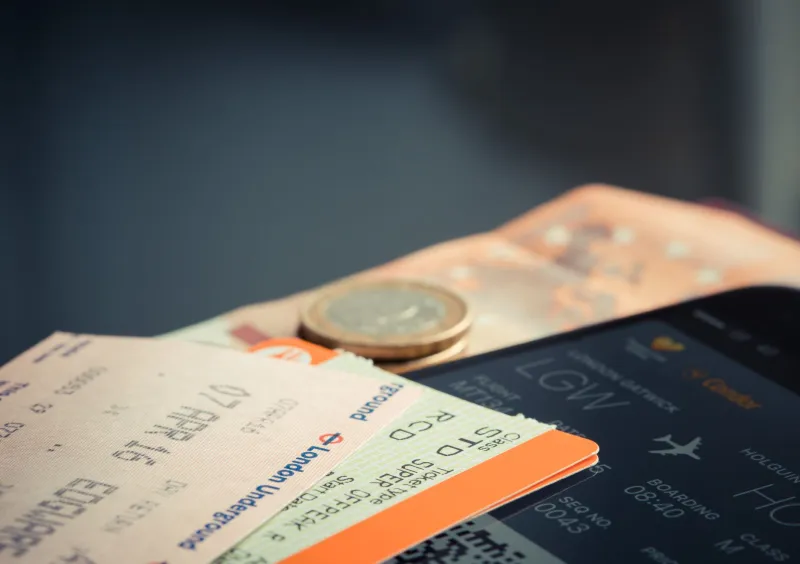
Call it the newest frontier in ticket arbitrage. While most American resellers are grinding through Ticketmaster queues for Taylor Swift pre-sales and NFL playoff games, a smaller, quieter cohort has pointed their attention roughly 7,000 miles west — toward Taiwan's concert ecosystem, where the pricing dynamics, regulatory landscape, and audience behavior create conditions that look, to the right kind of opportunist, like a wide-open market.
This isn't a massive industry. Not yet. But the mechanics are real, the money is real, and the implications for how Taiwan's live events sector matures are worth understanding.
Why Taiwan's Ticket Market Looks Attractive From the Outside
To understand why American speculators are paying attention to Taiwan, you have to start with the price gap.
Front-row or premium tickets to major international acts performing in Taipei are often priced at a fraction of what comparable positions would cost in the US. A premium floor ticket to a globally recognized pop act in Taipei might land between $80 and $150 USD. The same show, same artist, same relative position in a North American arena? You're starting at $300 and climbing fast once the bots get involved.
That gap creates the theoretical foundation for arbitrage: buy low in Taiwan, resell to international buyers willing to pay closer to Western market rates for the experience of seeing the show in Taipei — often with the added appeal of a travel experience attached.
But the gap isn't just about face value. Taiwan's primary ticketing infrastructure, while improving, still has inconsistencies that create secondary market opportunities. Different events use different platforms. Some use KKTIX, Taiwan's dominant ticketing service. Others use ibon, a convenience store-based system. Some smaller events still operate through direct venue sales or social media presales. That fragmentation means price discovery is uneven — and uneven price discovery is where speculators make their living.
The Platforms and the Gaps
Taiwan doesn't have a single dominant secondary market equivalent to StubHub or SeatGeek. What it has instead is a patchwork: Facebook groups where tickets change hands informally, LINE chat communities organized around specific artists or venues, and a handful of semi-formalized resale platforms that operate in a legal gray zone.
For American resellers operating from abroad, this fragmentation is both an obstacle and an opportunity. The obstacle is obvious — navigating multiple platforms in Mandarin, building trust with local sellers, managing the logistics of physical ticket delivery or transfer. The opportunity is that thin, fragmented markets are inefficient markets, and inefficient markets reward people who understand them better than the average participant.
Some US-based operators have addressed the language and logistics barrier by working with local partners — Taiwan-based contacts who handle the on-the-ground purchasing and transfer while the American side manages the international resale pipeline. It's a two-person operation that splits margin but dramatically reduces friction.
Real Cases: Wins, Losses, and Lessons
The wins in Taiwan ticket speculation tend to share a few characteristics: they involve acts with strong international fanbases, they happen in the window between ticket on-sale and show announcement reaching Western media, and they involve someone who moved fast.
One case that circulated in reseller communities involved a Japanese pop act with a significant American following that announced a Taipei date before any North American shows were confirmed. Speculators who purchased floor tickets at face value in the $90 range were reselling to American and Japanese fans abroad at $250 to $350 within 48 hours of the announcement going viral in fan communities. For buyers, the math still worked — cheaper than a North American show would likely be, plus an excuse to visit Taiwan.
The losses are instructive in different ways. Taiwan's ticketing platforms have increasingly implemented name-matching and ID verification requirements, particularly for high-demand events. Several speculators who purchased blocks of tickets for a major K-pop act found themselves holding non-transferable tickets tied to IDs they didn't control. The result was a complete write-off — money spent, no way to complete the resale.
Another common failure mode involves misjudging the secondary demand. Not every act that's huge in the US carries the same weight in Taiwan, and vice versa. A speculator who over-bought for an American indie act with modest regional popularity in Asia found themselves offering steep discounts in the final week before the show just to recover costs.
The Regulatory Picture
Taiwan has made moves toward regulating ticket resale, with legislation targeting scalping at multiples of face value introduced in recent years. Enforcement, however, has been inconsistent — particularly for transactions that occur in informal digital spaces like private LINE groups or overseas platforms.
For American operators, this creates a legally ambiguous environment. Reselling a Taiwanese ticket from US soil to a buyer in, say, Germany involves jurisdictional complexity that's genuinely unsettled. Most operators in this space are betting that enforcement attention stays focused on domestic scalpers at physical venues rather than international digital arbitrage — a bet that has largely paid off so far, but carries obvious long-term risk as Taiwan's regulatory framework matures.
"The rules are changing," noted one observer who tracks the Taiwan entertainment industry closely. "What's gray today might not be gray in two years. Anyone treating this as a stable business model is taking on more regulatory risk than they probably realize."
What It Reveals About Taiwan's Growing Market Importance
Strip away the speculation mechanics and the arbitrage math, and what this trend really reflects is something straightforward: Taiwan's live events market is becoming globally significant enough to attract the kind of attention that speculators pay to markets that matter.
Ticket speculation follows value. It flows toward markets where demand is real, where prices are mispriced relative to global benchmarks, and where regulatory oversight hasn't yet caught up to market activity. The fact that American resellers are looking at Taipei the same way they once looked at emerging US markets in the early StubHub era is, in a weird way, a signal of how far Taiwan's concert scene has come.
For fans — both Taiwanese locals and the Americans flying in to catch shows — the implications are mixed. More speculator activity means more competition for tickets and more pricing pressure in the secondary market. But it also means more international attention on Taiwan's events, more demand for the shows that get booked here, and ultimately more incentive for promoters to bring bigger acts to the island.
The secondary market is messy. It's always messy. But it's also, in its chaotic way, a form of flattery.