Forget Vegas: American Artists Are Quietly Booking Taipei Residencies — and the Numbers Make Perfect Sense
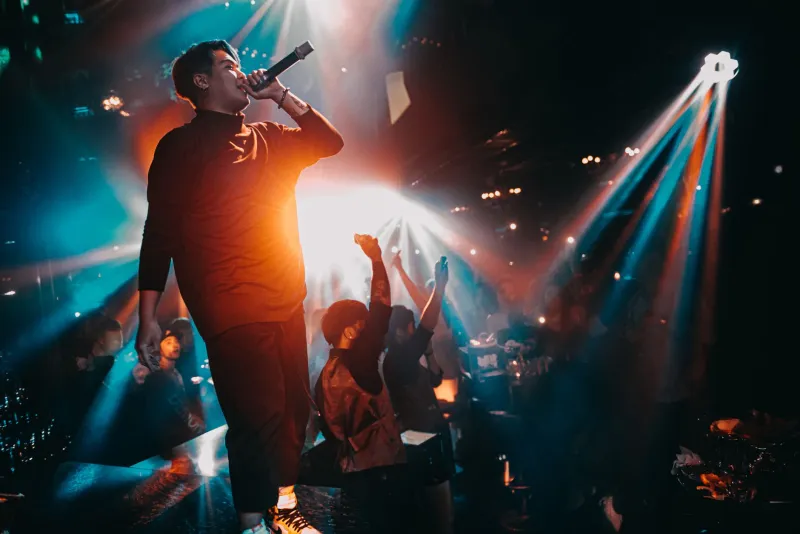
For decades, the American music industry treated residencies like a single-destination sport. You made it big, you called Vegas, you signed a deal with a casino resort, and you played the same songs to tourists sipping frozen cocktails for two years straight. That was the blueprint. Celine Dion, Britney Spears, Bruno Mars — the residency model felt fixed, almost sacred.
But something is shifting. Quietly, steadily, and with real financial momentum behind it, a growing number of US artists — some household names, some rising stars — are looking east. Specifically, they're looking at Taipei. And what they're finding there is rewriting their assumptions about where extended performance runs actually make sense.
The Economics Nobody Talks About Out Loud
Let's start with the money, because that's where the conversation almost always starts when you talk to touring professionals.
Vegas residencies come with enormous production budgets, aggressive casino expectations around ticket minimums, and a competitive landscape so saturated that even proven artists can find themselves fighting for visibility. The margins, after production costs, venue splits, and promotional overhead, are often thinner than the public imagines.
Taipei operates on a different math entirely. Venue rental costs at mid-to-large capacity spaces — think Legacy Taipei, The Wall, or the increasingly versatile spaces around Xinyi District — run dramatically lower than comparable Western markets. Production crews are skilled, professional, and cost-effective. And here's the kicker: Taiwanese concert audiences are among the most dedicated ticket buyers in Asia. Sellout runs aren't a hope — for the right artist, they're almost a given.
"The financial conversation has genuinely changed in the last three years," says one US-based tour promoter who asked to remain unnamed while deals are still being finalized. "Artists are coming back from Taiwan legs of tours and asking why they can't just stay longer. The overhead is manageable, the crowds are unreal, and the press coverage across Asia amplifies everything you do there."
What Taipei Audiences Actually Bring to the Table
If you've never attended a live show in Taiwan, it's difficult to fully describe the energy without sounding like you're overselling it. American fans are enthusiastic, sure. But Taiwanese audiences bring something different — a depth of fandom that borders on devotional.
Artists who've performed extended runs in Taipei consistently report that the crowds know deep cuts, show up dressed to reflect album eras, and engage with the performance in ways that feel genuinely reciprocal. It's not passive entertainment consumption. It's active participation.
For artists who've spent years playing Vegas rooms where half the audience is there because the tickets came with a hotel package, that distinction matters enormously.
"I played four nights at a venue in Taipei last spring," one indie-rock artist from the Pacific Northwest shared at a music industry panel earlier this year. "Every single night felt like the audience had studied for it. They knew what I was going to play before I played it, and they cared about every transition. That's the kind of room that makes you want to stay."
That emotional feedback loop — artist energy feeding audience energy feeding artist energy — is something promoters in Taiwan have understood for years. It's only now that American touring professionals are catching up to what it actually means for an extended residency model.
Creative Freedom as a Feature, Not a Bonus
Vegas residency contracts are notoriously prescriptive. Setlists get locked in. Production designs are fixed after opening night. The casino wants consistency because their guests expect the same show their friends saw three months ago.
Taipei doesn't operate with those constraints. Venue owners and local promoters here are far more interested in the artist's creative vision than in delivering a standardized product to rotating tourist audiences. That flexibility is something artists — particularly those in the middle of recording new material or experimenting with live production concepts — find genuinely valuable.
Several US artists have reportedly used Taipei residency runs as de facto testing grounds for new material, rolling out unreleased tracks to audiences who respond with the kind of informed enthusiasm that actually helps shape final album decisions. It's a creative incubator disguised as a performance run.
"Taiwan gives you room to breathe artistically," explains a Taipei-based venue booker who works regularly with international acts. "We're not asking artists to deliver a theme park experience. We want the real show, the evolving show. That's what our audiences come for."
The Asia Amplification Effect
There's a strategic dimension to the Taipei residency trend that goes beyond any single run of shows. Taiwan sits at a unique geographic and cultural crossroads in Asia. A successful extended engagement in Taipei generates press coverage that ripples across South Korea, Japan, Southeast Asia, and increasingly, back to North American music media.
For an artist looking to build or deepen their presence in Asian markets — one of the fastest-growing consumer bases for live music globally — a Taipei residency functions as both a revenue generator and a visibility multiplier. The coverage-per-dollar ratio, as one manager put it bluntly, "doesn't exist anywhere else."
Streaming data backs this up. Artists who complete Taipei runs consistently see measurable spikes in plays from across Asia in the weeks following their performances. The social media content alone — generated by those deeply engaged Taiwanese fans — circulates widely across regional platforms in ways that no marketing budget can fully replicate.
What This Means for American Fans Watching From Home
If you're a US fan and your favorite artist suddenly announces a string of Taipei dates, don't treat it as a footnote to a bigger tour. Increasingly, those dates are the main event — the place where setlists are freshest, production is most experimental, and the artist is most invested in what's happening on stage.
And honestly? That's a pretty compelling reason to start looking at flights.
Here at LGEvent TW, we've been tracking the momentum building around international acts choosing Taiwan as a serious performance destination for a while now. What's changed recently isn't the quality of the venues or the passion of the audiences — both have always been exceptional. What's changed is that American artists and their teams are finally paying attention to what those factors actually add up to.
Vegas will always have its place. But the smart money — and increasingly, the creatively ambitious artists — are asking a different question: why settle for one residency model when Taipei is offering something better?