How Taipei Became the Live Music Mecca That American Fans Are Literally Building Their Lives Around
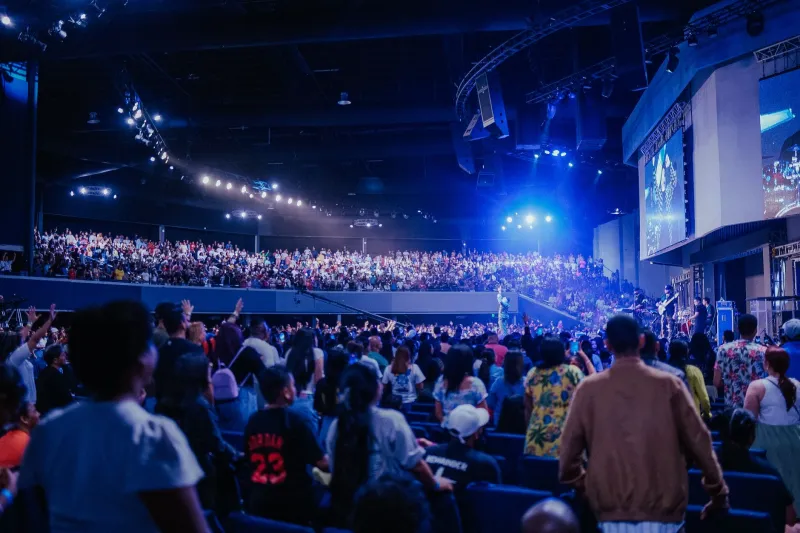
There's a moment that keeps coming up when you talk to American fans who've made the trip to Taipei for a show. It's not the encore. It's not even the setlist. It's that specific second — usually somewhere between clearing customs at Taoyuan International and stepping into a venue like Legacy Taipei or Zepp New Taipei — when they realize something has fundamentally shifted in how they experience music.
Call it the Taipei pivot. And for a surprisingly large and growing community of US-based concert-goers, it's become the defining before-and-after moment of their lives as music fans.
It Started as a One-Time Thing (It Never Stays That Way)
Ask almost anyone in this community how their first Taiwan concert trip happened, and you'll get some version of the same story. A favorite artist announced Asian tour dates. North American stops were sparse, overpriced, or just plain sold out. Someone floated the idea — half-joking — of flying to Taipei instead. Then they did it.
Jessica, a 29-year-old graphic designer from Portland, Oregon, made her first Taiwan trip three years ago to catch a K-pop act that skipped the West Coast entirely. She booked the flight mostly on impulse. "I figured it was a one-time splurge," she says. "I've gone back every year since. At this point I plan my whole PTO calendar around what's coming to Taipei."
That pattern — the impulsive first trip that quietly becomes an annual ritual — is more common than you'd think. And it points to something bigger than just smart ticket hunting.
What Taiwan's Venue Ecosystem Actually Does to You
Part of what makes the Taiwan concert experience so sticky is the sheer range of venue sizes and formats the island offers. You've got intimate spots like The Wall in Gongguan that put you close enough to see a guitarist's pick hand in real time. Then there's the other end of the spectrum — Taipei Arena, the massive outdoor stages at festival grounds in Taichung and Kaohsiung — where production values rival anything you'd find at Madison Square Garden or the Hollywood Bowl.
But here's the thing that American fans consistently point to as the real difference: the crowd culture. Taiwan's concert audiences tend to be intensely present. Phones go up for the moments that matter, sure, but there's a communal attentiveness in Taiwanese venues that a lot of US fans describe as almost meditative compared to the distracted, over-curated vibe they feel at shows back home.
"In LA, I'm always aware of everyone filming, everyone performing their enjoyment for Instagram," says Marcus, a 34-year-old music teacher from Chicago who's attended concerts in Taipei four times. "In Taipei, people are just... there. It changes how you listen. You start actually listening."
That shift in listening — in genuine absorption — is something fans describe as almost impossible to unlearn once you've experienced it. It resets expectations in a way that makes going back to a standard American arena show feel weirdly hollow.
Concert Tourism as Identity, Not Just Hobby
What's happening here goes beyond travel enthusiasm or even serious fandom. Psychologists who study leisure behavior have a term for this: identity-based consumption. Basically, the experiences we choose stop being things we do and start being things we are.
For this community of Taiwan-focused concert travelers, the pilgrimage to Taipei has become a core part of how they understand themselves as music fans. They're not just people who like live music — they're people who fly to Taipei for live music. The distinction matters to them, and it shapes everything from the artists they follow to the online communities they participate in to the way they talk about music with friends back home.
Online spaces dedicated to this overlap — Taiwan concert travel, ticketing logistics, venue deep-dives — have grown noticeably in the past two years. Reddit threads, Discord servers, and fan community boards are full of Americans trading intel on upcoming shows at spots like ATT Show Box or the outdoor stages at Hohaiyan Rock Festival in Fulong. The conversation has its own vocabulary, its own inside knowledge, its own sense of belonging.
"It's kind of become my people," says Danielle, a 26-year-old from Austin who discovered the community after her first Taipei trip two years ago. "Like, my friends at home love music too, but they don't get it the way people in this group do. There's a shared language around what it feels like to be in a Taiwanese venue."
The Artist-Fan Connection That North American Touring Can't Replicate
There's another dimension to this that doesn't get talked about enough: proximity to artists at a different stage of their international trajectory. Many of the acts that draw American fans to Taiwan are either ascending before their North American breakthrough or are established enough regionally that their Taipei shows carry a different emotional weight than their US dates.
Shows in Taiwan often feel less like commerce and more like community. Artists playing mid-sized Taipei venues are frequently more accessible — in terms of meet-and-greet opportunities, post-show presence, and the general intimacy of the performance — than those same artists would be headlining a US amphitheater. American fans who've caught artists at this stage describe a sense of connection that feels genuinely mutual rather than transactional.
"I saw someone at Legacy Taipei who's now selling out arenas in the US," Marcus recalls. "I was fifteen feet from the stage. Six months later I watched them play a shed venue outside Chicago from row forty. It's not the same relationship. It can't be."
That early-access emotional bond — forged in a Taipei venue before the algorithm caught up — becomes part of the fan's identity in a way that a later, larger show simply can't manufacture.
What This Means for How Americans Think About Live Music
The Taiwan concert pilgrimage effect isn't just a quirky travel trend. It's a signal about what a lot of American music fans are actually hungry for: smaller distances between themselves and the artists they love, audiences that are genuinely engaged, and experiences that feel earned rather than consumed.
Taiwan's live music infrastructure — built around a culture that takes concerts seriously as cultural events, not just entertainment products — happens to deliver all of that in a package that also includes incredible food, accessible public transit, and a general hospitality that makes first-time visitors feel immediately at home.
For the fans who've made the trip once, the return isn't really a question. It's just a matter of which shows are coming and when to book the flight.
If you haven't started watching Taiwan's concert calendar yet, now's a pretty good time to start. Your future music identity might be waiting for you somewhere between Taipei Main Station and a venue you haven't heard of yet — but definitely will.